Powered By Blogger
Showing posts with label Egyptian wildlife. Show all posts

Friday, February 10, 2012

Lizard foolishness


Today in our front yard there was a sudden flurry of activity.  My dog chasing something.

Then  my dog was lunging at something on the tiled pathway. It looked like some kind of worm, wriggling back and forth in a sort of curving motion. There was no head to this worm, however. One end of it was a straight transverse line with some dark coloration; and it tapered to a pointed tip at the other end. Kind of disgusting.

Then I realized what it was.

I'd seen a lizard earlier. We have pretty lizards here. When they catch the light their stripes, which run the length of their body, turn a vivid greenish blue.

This was the tail of one of these lizards. A large part of the tail, perhaps half or two thirds. I'd heard lizards can grow back their tails. I went to the internet to check.

To my relief, it looks as if the tail will grow back. Especially because there was no bleeding. It will take several months to grow, though.

The tail was twitching for a few minutes, especially if my dog jumped towards it. This wriggling is a distraction for the predator, so that the lizard can escape, missing some of its tail and some of its dignity, but keeping its life. I tried covering the tail with my shadow and then removing the shadow. The tail seemed to twitch when the sunlight fell on it again.

About fifteen minutes later, while I was sitting in the sun and studying my hieroglyphics book, another lizard showed up. This lizard was intact. It seemed to be surveying the scene of the crime. "You'd better go away," I said to it. "My dog will come after you." As if it understood, it scurried under a trash can.

Well, the weather is warming up and young and stupid animals are coming out and getting into trouble. The lizard that ran under the trash can probably went and found its foolish progeny and gave it a lecture, telling it to be more careful in future.

Friday, February 3, 2012

Groundhogs and Mole Rats

Yesterday was Groundhog Day. So my friend Elizabeth (a second Elizabeth, not the one I referred to yesterday) posted this picture on FB. So I commented that there are no groundhogs in Egypt. And that there's no weather suspense here, because every day is sun, sun, sun. Although we've had a couple of bright but overcast days lately, and one very windy day.

I checked my facts before commenting. Referring to my trusty book: A Field Guide to the Mammals of Egypt, by Richard Hoath, The American University in Cairo Press, 2009, ISBN 9789774162541. [Visit aucpress.com. They have some fantastic books!]

There are no groundhogs in the rodent section of this book. But there is a rodent called the mole rat. The Lesser Mole Rat, spalax leucodon, to be precise. This animal is a relative of gerbils and gerboas. Like moles, the mole rat is a blind burrower which throws up mounds of earth. Like rats, it is a rodent.

Here is a picture of the little cutie, courtesy of Wikipedia. [But Wikipedia lists its habitat as eastern Europe. No mention of Egypt. They should read Hoath's book!]

Because, per Hoath, there are no moles in Egypt, I've already eliminated from my book draft a reference to moles.

Now I might add the reference back in. An Ethiopian scathingly compares Egyptian "mountains" to molehills. Which doesn't work. But he could compare them to mole-rat mounds.

Or that might just sound weird!

Egypt does have real mountains, though. In Sinai, which was part of Egypt in ancient times as well.


Monday, December 26, 2011

Roaring Camels


This morning the camels are roaring. That's the only word for the infernal racket they're making. Well, actually, I think it's just one camel making all the noise.

Two doors down from me, on the corner, is a camel stable. They sell camel rides to tourists. On camelback would be a pleasant way to see the west bank of the Nile here. I didn't try it yet. Although I have ridden a camel twice before. Once out a short way into the Sahara desert in Tunisia. Once out into the edges of the rocky Sinai desert.

In my novel-in-progress, I refer to camels bellowing. When I arrived in this neighborhood, I was pleased to find that this is as close as I'm going to get to representing their noise. But this morning the camel isn't bellowing. Well, he or she doesn't sound exactly like a lion either. But the closest representation of the noise is roaring. And it gives me another word to use for camel sounds, to give some descriptive variety. Onward & upward! All grist for the mill.

I was out walking my dog yesterday. We passed a camel which was loose, ambling along the Nileside path. It was a young camel. Not the full-grown height, and with hair that is still a little curly and fuzzy. Later we passed it calmly waiting outside the stable. Not tethered. I guess camels aren't always recalcitrant. Maybe it was mealtime!

Still hoping to finish first revision by Coptic Christmas. On a little hiatus. I'm past the crisis and its immediate aftermath, but I have a feeling I'll have to revisit this section before moving on. After all, I can't see where I'm going if I don't see where I've been. Which is part of the reason for studying history, and for writing or reading historical fiction!

Wednesday, November 16, 2011

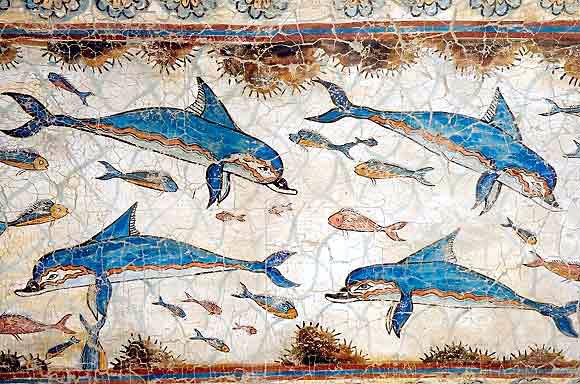
Ancient Dolphins

I'm researching dolphins. In particular, dolphin rescues of humans, in ancient and modern times.

What do dolphins have to do with ancient Egypt, you ask? Well, there are various dolphin species in the Red Sea, including Bottlenose Dolphins. In the Mediterranean as well.

What do dolphins have to do with my book? They come to the rescue of my hero and his friend, of course. One of the good things about writing fiction is getting to write stuff like this!

Click on this link for a beautiful picture of playful ancient dolphins:

On Wikipedia and elsewhere, you can find the tale of how the ancient Greek poet Arion was rescued by dolphins.

And there is a website page called Dolphins Rescuing Humans.

It will be interesting to see whether sharks also existed in the Red Sea in ancient times. This is what I'll be looking up next.

Mongoose Crossing


On the way to Abydos I saw two strange large-ish short-legged animals crossing the road, one after another. They were about the size of a beaver, but not as bulky. More weasel-ish in shape. But, like beavers, they had tails that seemed disproportionate to the size of their body. The tails weren't flat and hairless like beaver tails, though. The tail, like the rest of the body, was covered in brown hair—the same color as a beaver.

I asked the driver what they were. He said "mongoose", without hesitation. In English, no less.

I've been in Egypt a year, and this was the first time I'd seen a mongoose. Very exciting, especially because my novel has a mongoose in it.

I guess I shouldn't be surprised that I didn't see any mongooses before. After all, my guide book to Egyptian mammals says that they don't exist in this part of Egypt at all—only in the Delta and Faiyum. It does say that there are older reports of sightings as far upriver as Asyut—which is a considerable distance downriver from this area.

All I can say is that I saw what I saw. It wasn't a mirage. The driver saw them too. And he didn't seem surprised to see them. So I guess they're not all that unusual around here after all. There just haven't been any official sightings.

I have a postcard of duck hunting and fishing in the marshes─a copy of a wall painting in Menna's tomb. There are various birds flying up from the papyrus plants. There are two animals in among the papyrus. One is climbing up the stalk of one of the plants, and the other is already reaching into a nest for the eggs. Now I can recognize animals as mongooses.

According to the guidebook, while there are many varieties of mongoose worldwide, the Egyptian variety is grizzled. Well, the pair I saw had rich brown fur. Perhaps grizzling would have been visible if I had been closer. The two mongooses in the ancient picture have blond fur. So I suppose there were more varieties in ancient Egypt than there are now.

It's hard to imagine how such a large-ish animals could climb papyrus stalks. But squirrels can perch on flimsy  branches. Their fur makes their bodies look much bulkier than they really are. The same must be true of mongoose.

Apart from eggs, mongooses eat a varied diet—including snakes!

The guidebook is: A Field Guide to the Mammals of Egypt by Richard Hoath, The American University in Cairo Press, Cairo, New York, 2009. A very useful reference with good color pictures.

By the way, I always thought the plural of mongoose was unchanged—mongooses. But Prof. Hoath, Wikipedia, and dictionary.com all say mongooses.

Tuesday, July 12, 2011

Flood and Flame


The ancient Egyptians had a tale of how the earth emerged—one of their many tales of how our world came to be.

They envisioned a great watery chaos. And in the middle of the swirling waters appeared a little earthen mound, called the Benben. And standing on top of that mound was the Benu bird (or Bennu bird), the Gray Heron. And the earthen mound grew and grew, larger and larger, until it became the wide earth that we walk on every day.

This tale seemed strange to me until the other day, when I was on the Nile ferry. A clump of weed was floating down the river. And an egret was standing tall and serene on that rapidly-floating clump of weed.

Now it all made sense. When the Nile flooded, great clumps of mud with vegetation floated down the river, with long-legged avian passengers standing on them. This flood brought the rich black soil which made possible the harvest, without which life would be impossible.

So the Benu bird was a symbol of life born in the flood-waters.

But the fire of the sun is essential for life—as essential as water. So the ancient Egyptians also believed that the Benu bird was born in the flames of a burning tree in Heliopolis, the city of the sun, near Memphis.

The ancient Greeks adopted this Gray Heron as the Phoenix, born in flame. Herodotus reported that the Phoenix lays an egg in the flames, once every five hundred years, and the new bird hatches from this fire.

The Sothic cycle is an ancient-Egyptian cosmological pattern that repeats roughly every 1500 years (or three times five hundred years).  The ancient-Egyptian priests in Heliopolis may have used the legend of the fiery Benu bird to express their knowledge of the Sothic cycle or of some other cosmological cycle. The tale was a kind of code, revealing to the inquisitive Greek stranger the fact that they possessed this knowledge, without revealing too much of the knowledge itself.

So there we have the opposites, flood and fire, united in the paradoxical tale of the Benu bird or Phoenix, symbol of life.

[Wikipedia has an article about the Bennu bird. We have linked to their really cool picture. wh
Wikipedia also has a comprehensive article on the Sothic Cycle.
Also an article about the Phoenix, including the relevant quote from Herodotus.]